
Throughout this 20e The FIFO edition of the festival includes meetings on the topics discussed during the festival. Among them, the duty of memory. To discuss this topic, three personalities, three directors: Wallès Kotra, Marie-Hélène Villierme and Dorothée Tromparent.
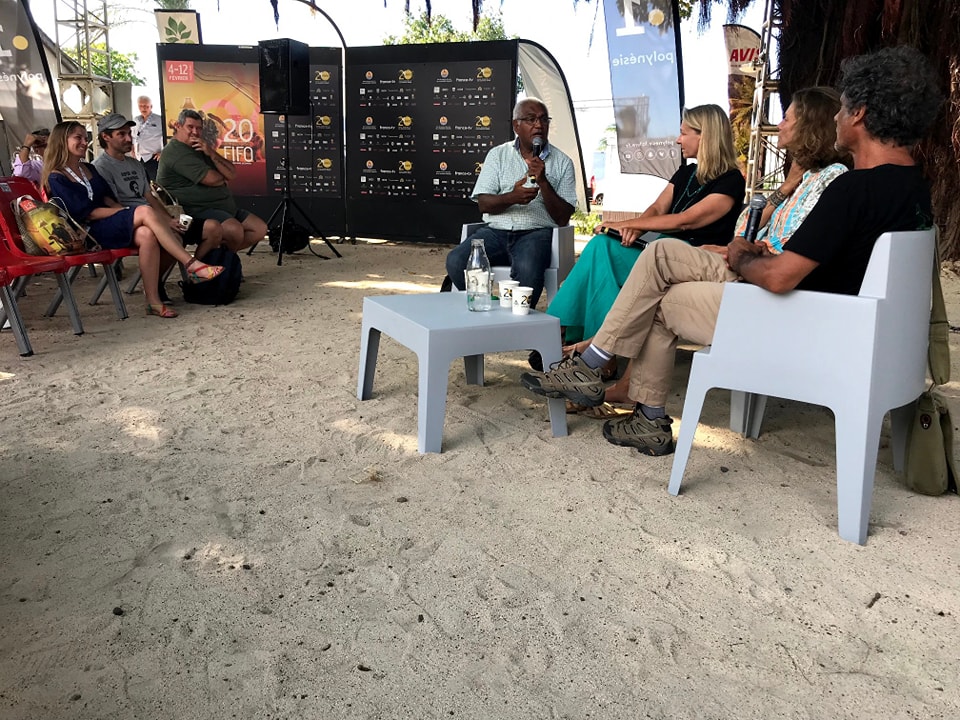
Documentaries carry stories and messages. Often, they stir emotions and leave a mark on the minds of the audience. But they also have another function: to carry a memory. The memory of a country, of one or more stories. They then become indispensable and essential. The filmmaker Dorothée Tromparent in Waan Yaat tells of a terrible murder linked to Events in New Caledonia. In her film, she gives the floor to the killers and the victims. « Part of the history of Caledonia has not been written. But we realize that there is a deficit of memory, and that is very painful. So, when the words come out, it is incredible. I try to raise questions through the films with the intention of trying to repair the damage.». Repair… A word that takes on a whole new meaning when the stories told in the documentaries are true. That is the case with the excellent film by Marie-Hélène Villierme The elected representative of the people, Pouvana’a te putua, which won the public award in 2022. This documentary recounts the story of Pouvana’a a Oopa, a little-known yet decisive page in Polynesian political history. It is also the story of a man who was unjustly accused and exiled from his land by the colonial French justice.« The idea behind this film was to repair ourselves and reconcile with ourselves. And that also means accepting the parts of the shadow. For me, by opening these pages, we go through these wounds and this allows us to understand. Because the truth is out there; the words were released during and after the film. So this duty of memory is to tell what has been done and to comfort, I believe, too. Reconciliation is not over yet, but the film is a necessary and indispensable step to reach another step. ».
Work to continue
The path to truth, like memory, is not without obstacles and often very difficult.« The documentary is the narrative of the present; as soon as we start touching on the past it hurts because the wounds are not healed. »", confides Wallès Kotra, founding father of FIFO but also journalist and filmmaker. He is the author of two films: Jean-Marie Tjibaou, the murdered speaker? which is a portrait of this independentist figure and Tjibaou, the pardon, which recounts the story of reconciliation, 15 years after the assassination of Tjibaou by Djubelly Wea.« It’s difficult to talk about our history but it’s a very important issue. We need to tell it to our children as well because it’s our history and not the other people’s. There is still work to be done; we need to work with historians and with schools… This is a project and we are only just beginning. »A long work remains to be done, but documentaries are also there to accomplish it.« In Caledonia, memory is only beginning to emerge. Within families, parents have not told their children their story. So while the documentary may open the door to conversation, the reality is transformed after everyone has to do their part. »Dorothée Tromparent intervenes," The documentary can therefore serve as a duty of memory, but what remains essential is to make it accessible to the public. Because it is about finding meaning and restoring legitimacy to everyone.
Suliane Favennec – FIFO
 French
 English