
FIFO 2026 – The Oceania Impact Pitch for Indigenation is back. It is a must-attend event for emerging and experienced filmmakers who hope to one day bring their films to life.
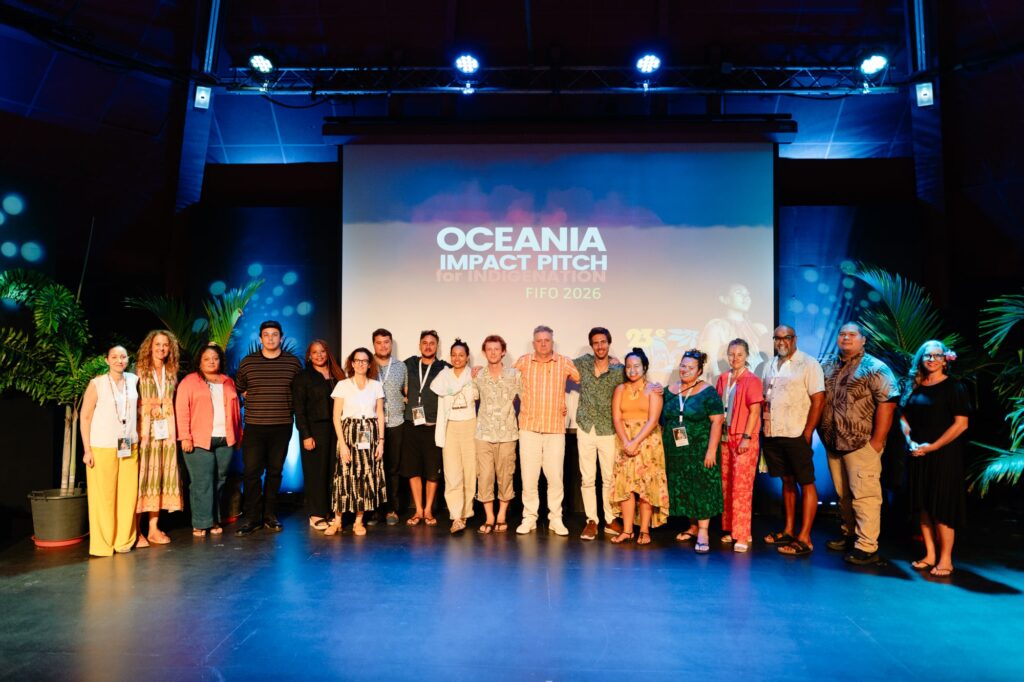
A film is born from a long process. The first step is to have a strong pitch. It is the core idea, the dramatic engine, or the hook used to present a project and sell a script. The pitch must therefore be short and effective, in order to encourage a producer to arrange a meeting with the author or quickly secure an option to lock in the project rights.
FIFO provides an opportunity for project holders to refine their pitches. Relaunched in 2024 in collaboration with the Impact Social Club, the Oceania Impact Pitch for Indigenation returns as a biennial highlight of FIFO’s professional program. It is a space for meetings, training, and presentations where Oceanian project leaders, broadcasters, and producers come together to bring original, bold, and socially engaged audiovisual projects to life.
Documentary project leaders work intensively to prepare their pitches and present them before a ury composed of professionals and decision-makers from Oceania and Europe (festivals, producers, funders, broadcasters, distributors).
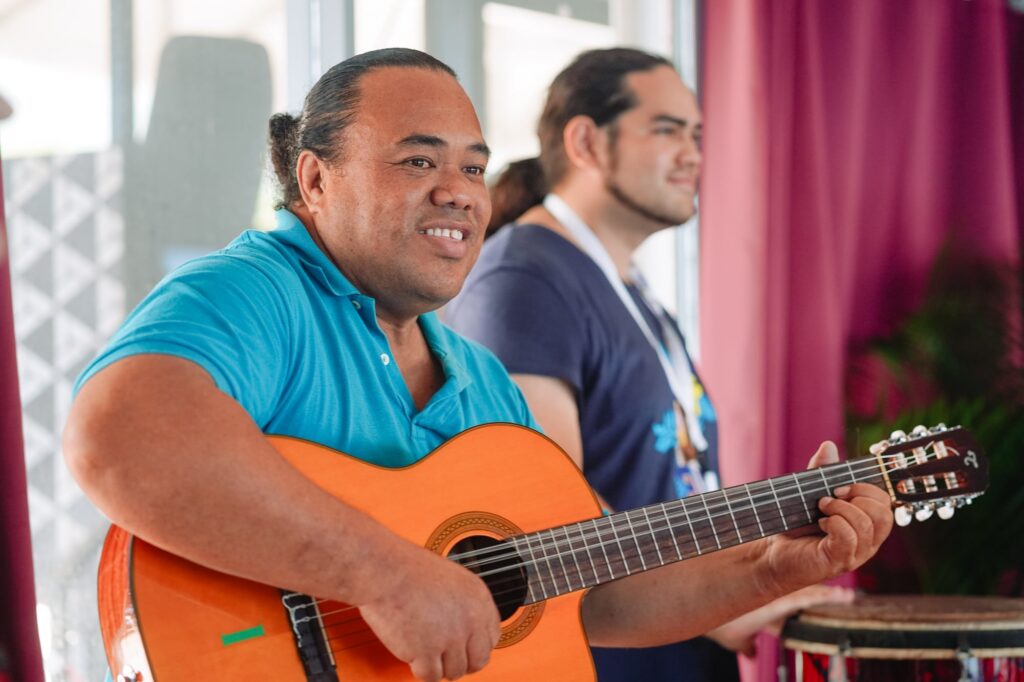
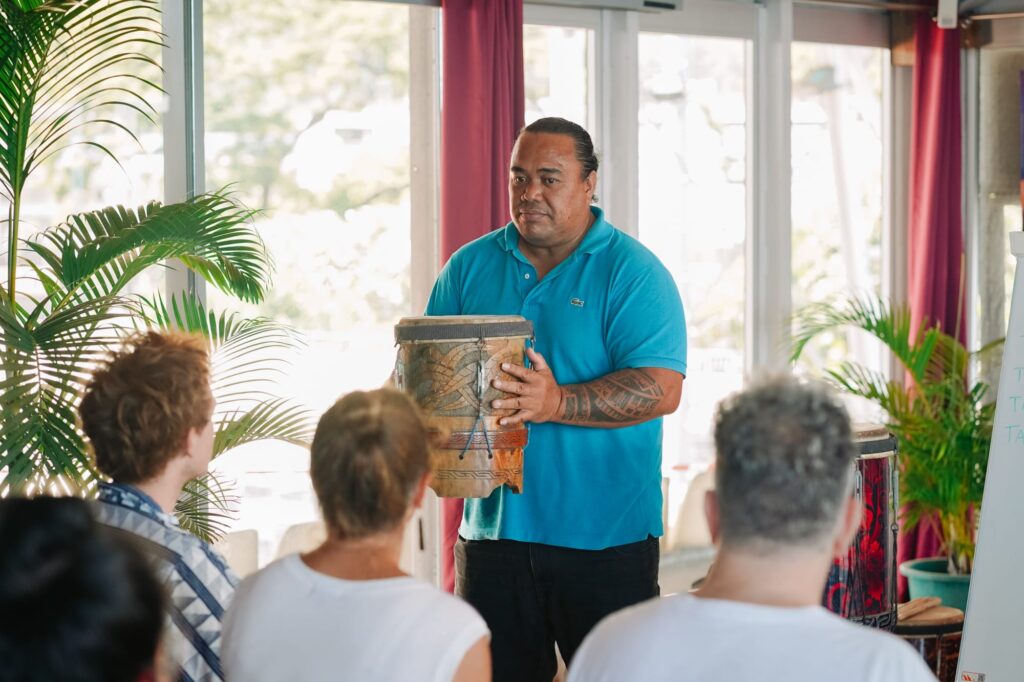
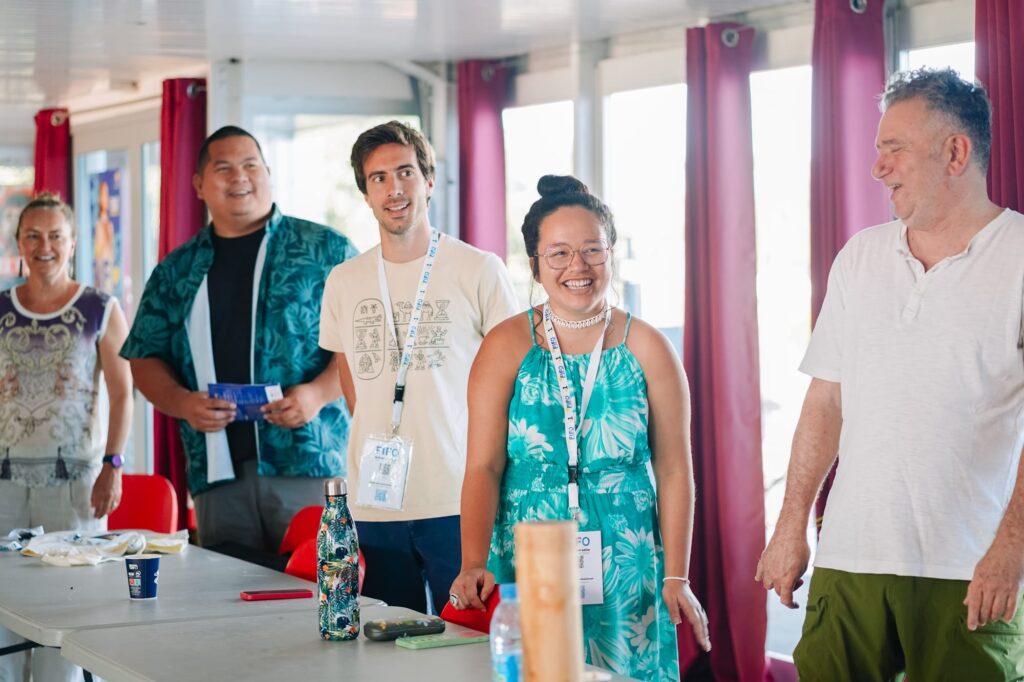
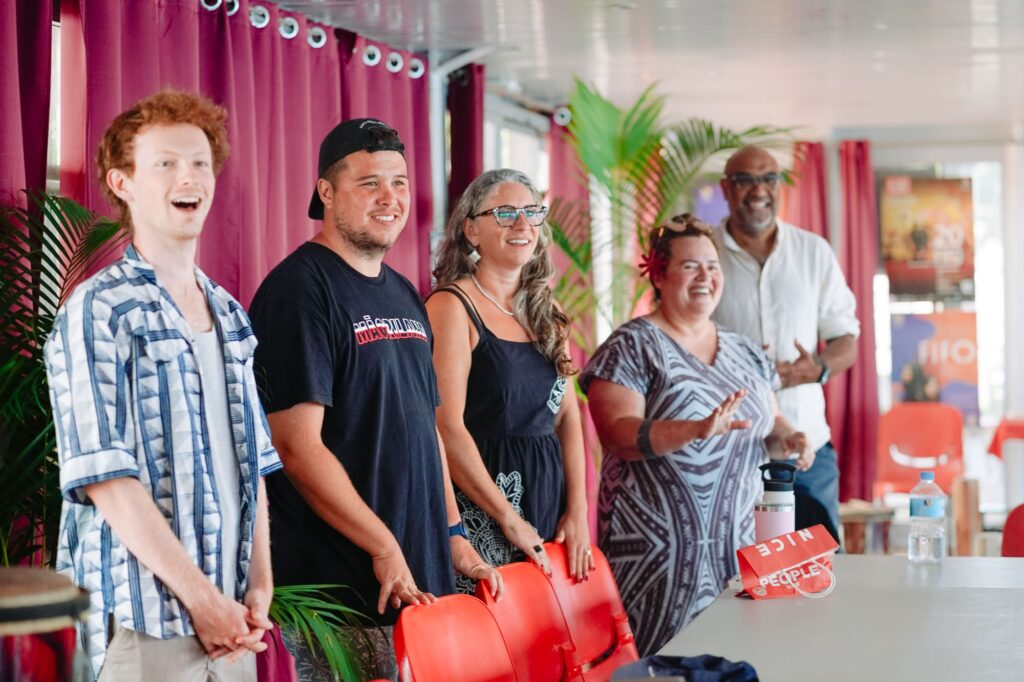
To prepare, participants attended a “pitch” and an “impact” masterclasses. This session provides filmmakers with essential tools to build compelling impact pitches. The goal is to learn how to clearly present the story of their documentary, articulate their artistic vision, and demonstrate its potential impact. It also helps participants learn how to inspire confidence, spark curiosity, and convince the right partners to join their project. In addition, they benefited from individual coaching sessions.
7 minutes to convince
After a week of workshops, participants present their projects before the Oceania Impact Pitch jury. They have 7 minutes (including a trailer) to convince, followed by 7 minutes of discussion with the jury and the audience.
All selected projects align with FIFO’s values and contribute to the preservation and promotion of Oceania’s Indigenous cultures.
Khadidja Benouataf, President of the Impact Social Club and trainer for the Oceania Impact Pitch for Indigenation, explains:
“This year, seven film projects were selected, but in the end, six are present. They come from across Oceania. From the very first days of training, we saw the projects evolve.”
Carrying an engaged project, reaching an audience, supporting strong messages, or telling a “good” story takes time.
Samy Cunéo, one of the participants, explains:
“These workshops help us. That’s also the strength of FIFO. In Tahiti, we are isolated most of the year and we don’t often get feedback from audiovisual professionals.”
This afternoon, from 4 p.m. to 6 p.m., project leaders will present their pitches before a major jury and the public at the Petit Théâtre of the Maison de la Culture. The best project, beyond gaining visibility, will receive an award and a prize of 200,000 CFP francs. All participants hope to win and present their film at the Festival in the near future.
Saphyr Morhain, pitching: “In Their Eyes, Faaite”
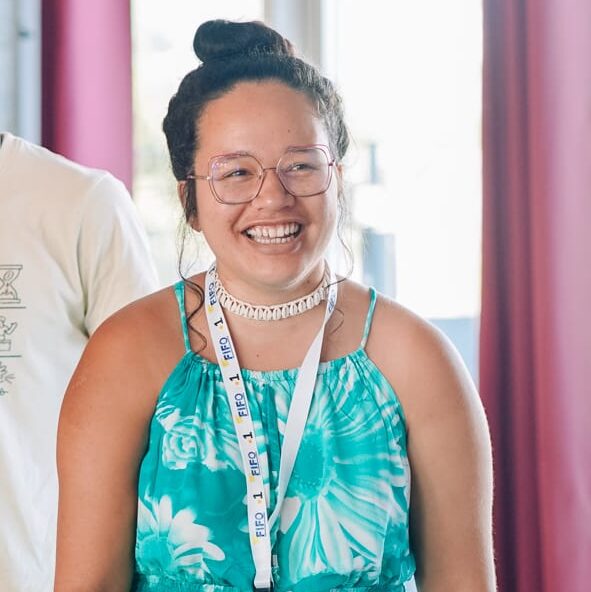
Why this project, and what motivated you to take part in the best pitch competition?
“I am originally from Tahiti. My pitch addresses a topic that concerns Polynesia, and more specifically the Tuamotu archipelago. I believe my film project ‘In Their Eyes, Faaite’ is important. It deals with resilience and forgiveness.”
Is participating in FIFO and the Impact Pitch an advantage for your project?
“Absolutely. It allows me to develop it further, refine it, and see angles I hadn’t considered before. It helps me a lot. It’s also important to meet professionals in the audiovisual sector. As a film student, we don’t often have the opportunity to meet so many key industry figures. It really strengthens the project.”
Do you hope to win this competition?
“Yes, because it would open many doors and provide many opportunities. The goal is, of course, to present it at FIFO. We would like to show our film to Polynesian audiences and share our work.”
“In Their Eyes, Faaite” – Synopsis
In 1987, on the atoll of Faaite, a collective psychosis led to the “bonfire affair.” Forty years later, the author’s parents, Christian Morhain and Josette Pohue—witnesses and residents at the time—return to the atoll to meet families and recount how they lived through this tragedy, navigating memory, forgiveness, and resilience.
Samy Cunéo, pitching: “We Were Kings”
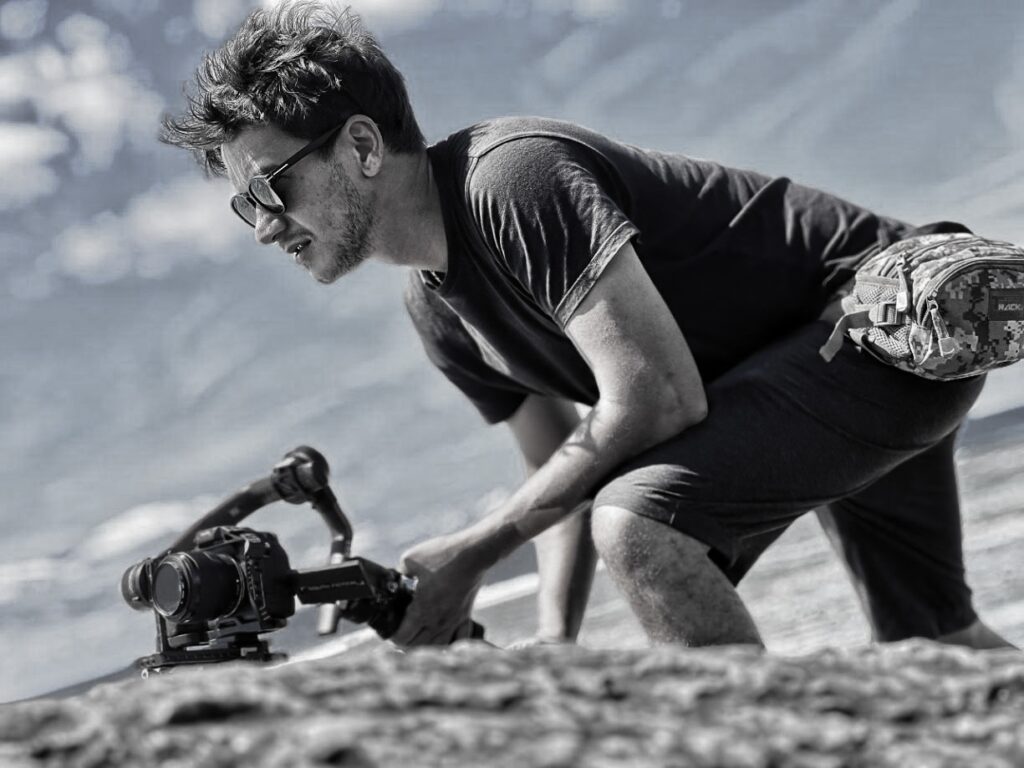
What led you to join the Oceania Lab and take part in the pitch competition?
“Initially, I tend to stay behind the camera or at the editing table. I find it difficult to connect with other creators. In previous years, I attended FIFO, but this year, following advice from Laura Théron (General Delegate of FIFO), I decided to present my project. The Oceania Pitch is truly inspiring and eye-opening. You learn a lot.”
How do you prepare for pitching in front of the jury after a week of workshops?
“During the week, you realize that some participants, like those from Fiji, have already pitched across the Pacific. For me, it’s my first time. I struggle with public speaking, so I prepared a written version based on my script and how I would present it. Once here, through the workshops, I quickly realized there were many things to change. We are constantly revising our pitches. We work as a team of three: Temana Sengues, producer and co-writer, and Esther Cunéo, my sister, who is both narrator and a character in the film. I was supposed to pitch alone, but after seeing others, we decided to present as a trio. These workshops really help us. That’s also FIFO’s strength, being confronted with professionals and presenting our project to them.”
“We Were Kings” – Synopsis
For generations, a family from the island of Rurutu has carried the weight of a shame inherited from the colonial era: that of an ancestor who fell from grace, was exiled, and then devoured by cannibals.
Challenging this stigma, Silifu, an elderly Polynesian woman, embarks on a thirty-year quest across the Pacific.
Through archives, oral traditions, and by questioning both contemporary accounts and expert narratives, she seeks to restore her ancestor’s erased identity. Her journey reveals not only a forgotten royal lineage but also the profound power of questioning inherited narratives, raising a fundamental question: who truly holds the pen that writes History?
Khadidja Benouataf
President of the Impact Social Club and mentor for the Oceania Impact Pitch for Indignation
“Pitching is about convincing”
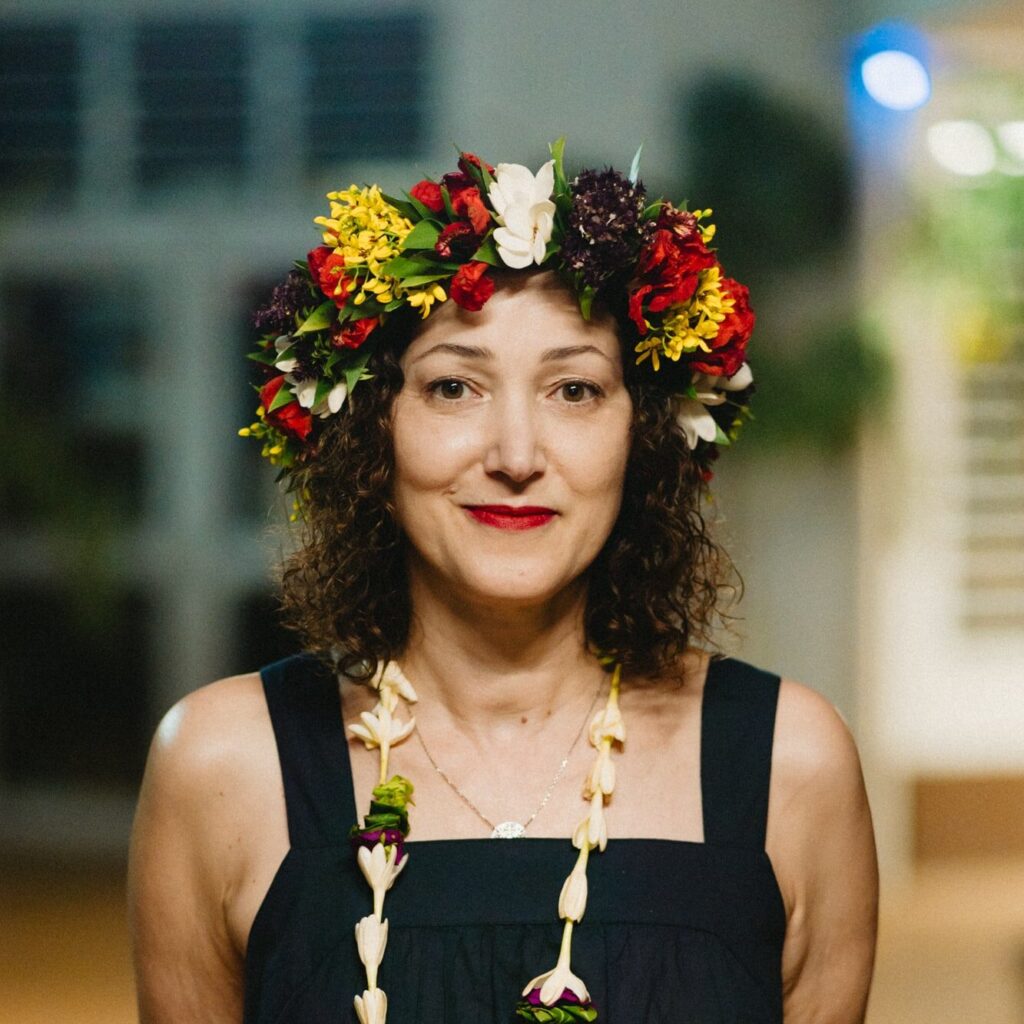
Can you introduce yourself?
“Five years ago, I created the first impact film association called Impact Social Club, together with the first French impact producers. It was dedicated to French-speaking impact cinema. Most impact resources are in English.”
How do the workshops unfold?
“It’s a lab over several days. We teach participants how to pitch and also about impact strategies. This year, there are six films from across Oceania (Fiji, Guam and the Northern Mariana Islands, the Cook Islands, Tahiti…) It’s very diverse.”
How can one participate?
“You have to apply. All applicants want their films to go as far as possible. It’s not just entertainment, it’s about addressing issues that can drive change.”
What makes a good pitch?
“A good pitch convinces professionals (broadcasters, distributors, producers). It’s a strong story told by the right person. Pitching is about convincing. It’s the first step in a film’s professional life.”
Have you seen improvement among participants?
“Absolutely. The way they talk about their projects changes. For some, it’s their first time pitching, so they must absorb a lot in a short time. Everyone pitched once with me, and they all made changes afterward. You can always improve a pitch, that’s the purpose of the lab.”
Teri Calder
Executive Producer, Documentaries – Impact and Partnerships specialist for ABC Australia, and jury member
“What matters is having messages that resonate”
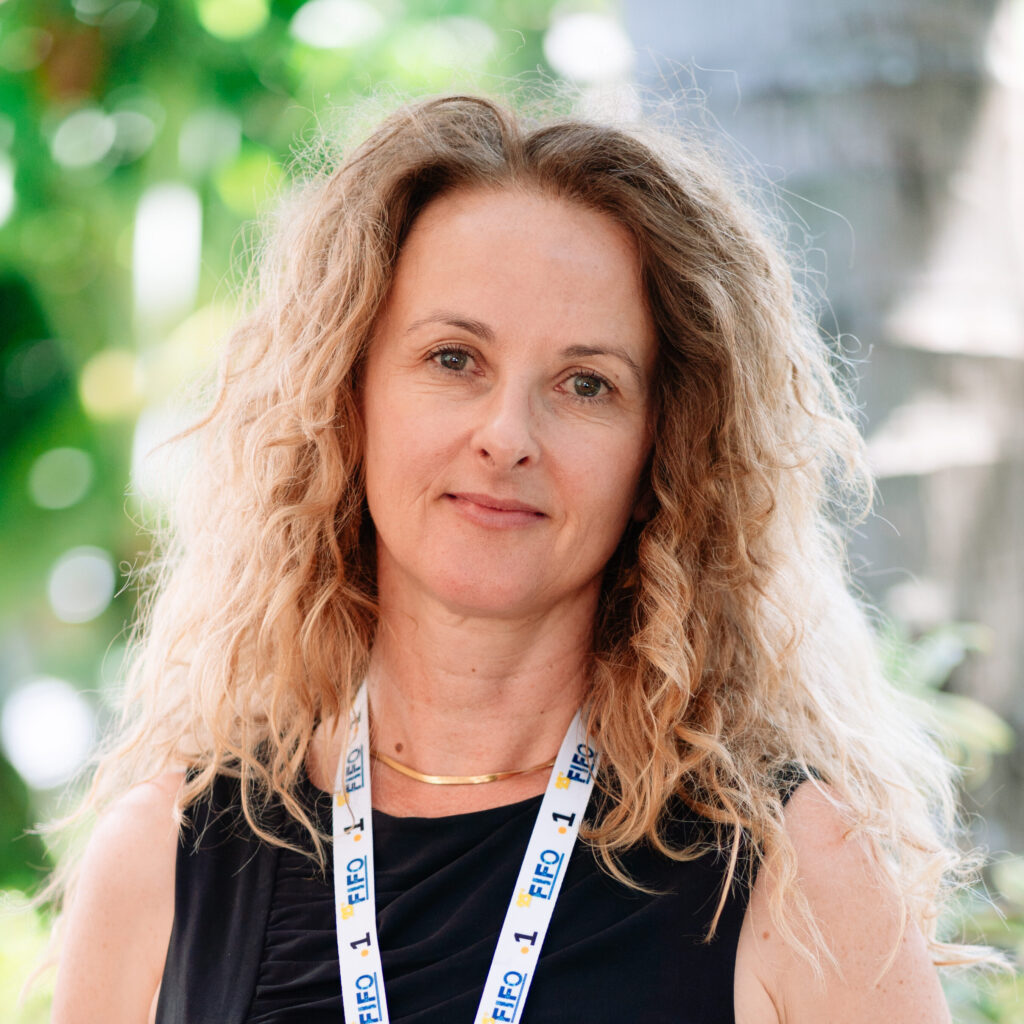
As a jury member, what types of projects do you usually encounter?
“I haven’t yet seen this year’s FIFO pitches, but I can speak about Australia. I like working on projects that have an impact on communities, long-term projects. The best pitches affect people’s lives. They are often social or environmental projects. We want projects that have real consequences and meaningful topics, such as mental health or general well-being. What matters is having messages that resonate and that speak to communities. Communities must not just be subjects, they must be part of the film.”
What are your evaluation criteria?
“The strength of the narrative and how it resonates with people. The way stories are told is also important. Communities must be included as active participants. The outreach strategy is also key, you need a targeted approach to reach audiences.”
Are there any ‘red flags’?
“Yes, when a project addresses a subject without consulting the people it is about. Not including the concerned communities is an immediate red flag.”
Any advice for participants?
“I expect a strong story and clarity about the intended audience. We need to feel something. A good pitch makes you want to see the film. You must think about the overall impact of the project.”
Jenny Hunter – FIFO TAHITI
Vaikehu Shan – FIFO TAHITI
 French